Training Immunity: a city that cares before illness
30 maggio 2025
From the role of prevention to the connection between lifestyle, mental health, and immunity: immunologist Alberto Mantovani discusses the vision of Milan as a city of integrated well-being
What is health today? No longer – or not only – the absence of disease, but a complex and dynamic balance, resulting from behaviors, contexts, and relationships. This is highlighted by the Milano Wellness City 2030 project, which aims to transform the city into a laboratory for prevention and quality of life, through the integration of healthcare, urban planning, educational, and cultural policies. In this scenario, one word strongly resonates: prevention.
And it is precisely from here that the dialogue with Alberto Mantovani, one of the most authoritative immunologists internationally, begins. His work has changed how we understand the immune system, revealing the deep link between chronic inflammation and cancer, and introducing pioneering concepts such as "decoy" receptors. But Mantovani is also a scientist who believes in the value of dissemination, in the need to bring science out of laboratories and into cities.
«Prevention constitutes a fundamental pillar for the health of individuals and the community," he states, "and for the sustainability of the National Health Service itself»
Alberto Mantovani
Immunologist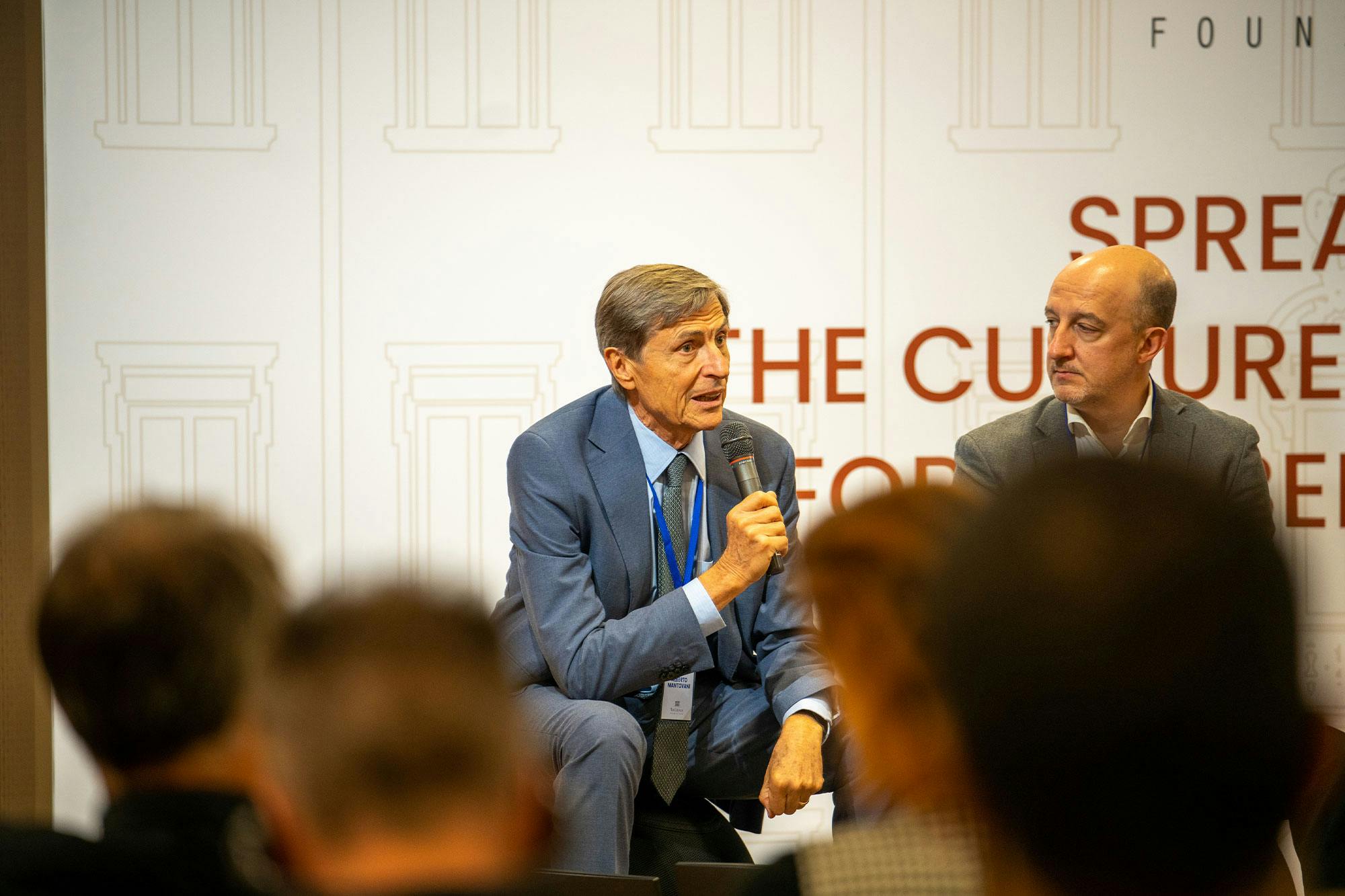
A vision that resonates with the approach of Lifestyle Medicine, one of the founding pillars of Milano Wellness City. A medicine of daily life, which intervenes before the hospital: in parks, in schools, in workplaces. A medicine that acts on the root causes of chronic diseases – smoking, physical inactivity, poor nutrition – and which, according to Mantovani, also has a direct impact on the immune system.
"Many aspects related to environment and lifestyle that impact survival and quality of life also impact the immune system. This applies to nanoparticles in the environment, smoking, overweight, and lack of physical exercise. Furthermore, the benefit associated with consuming fresh fruit and vegetables is believed to be partly linked to effects on the immune system. Finally, we cannot forget how vaccines constitute a form of training for our immune system."
Immunity, therefore, can be trained. Like a muscle, like a habit. Also through physical activity, which we now know has positive effects not only on the body but also on the effectiveness of oncological therapies. "Evidence is increasingly accumulating that physical exercise constitutes good training for the immune system. Data suggests it is an important component in preventing cancer risk. Furthermore, programmed physical exercise can support therapeutic approaches," Mantovani adds.
But the immune system does not live in isolation. It is in constant dialogue with the nervous system, with emotions, with the psyche. This is why psychological well-being is not an option, but a concrete lever for prevention.
«The nervous system and the immune system constitute the two 'maximal systems' in our body. We know there is a close dialogue between them, even if we don't fully understand the mechanisms. One of the ways the body responds to stress is by producing negative regulators of immunity, such as cortisone.»
Alberto Mantovani
ImmunologistA Finnish study, for example, recognizes that in breast cancer patients, 30 minutes of exercise increase the percentage of NK and CD8+ cells in the blood, while reducing suppressor lymphocytes (MDSCs), which are typical of tumors.
In this scenario of a new centrality for physical movement as a form of prevention, Milan becomes an ideal testing ground. A city that, as Mantovani reminds us, has also managed to innovate in public health in recent years, for example with the Milan Food Policy, internationally recognized and supported by Fondazione Cariplo.
"Milan has improved extraordinarily and represents a benchmark abroad for quality and attractiveness. However, traveling outside the city center, the challenge of inequality is evident, visible in the high rates of overweight children. This reminds us how urgent it is to work on widespread prevention." Prevention, for Mantovani, is a shared responsibility. Not only among professionals, but among citizens, institutions, schools, and businesses. A "social immunity" that calls for mutual care and health equity.
«The construction of a prevention culture must develop on multiple levels: at the city, regional, and national policy levels, but also within civil society. I am thinking in particular of the political and moral necessity to reach the most disadvantaged areas, which are also present in our city.»
Alberto Mantovani
ImmunologistAnd looking to the future, 2030 is the horizon, but 2026 is the catalyst: the Milan-Cortina Olympic and Paralympic Games will be the moment to demonstrate that health, sport, education, and innovation can be part of the same urban ecosystem. "Those who do scientific research have a duty to share the available evidence and open questions in the clearest possible way. To communicate, for example, the importance of lifestyle, weight control, and physical activity for general health, and for the proper functioning of the immune system."
Training immunity, building culture, making prevention accessible and daily. Milan Wellness City, in this, is not just a project: it is a vision of the future that has already begun to materialize.