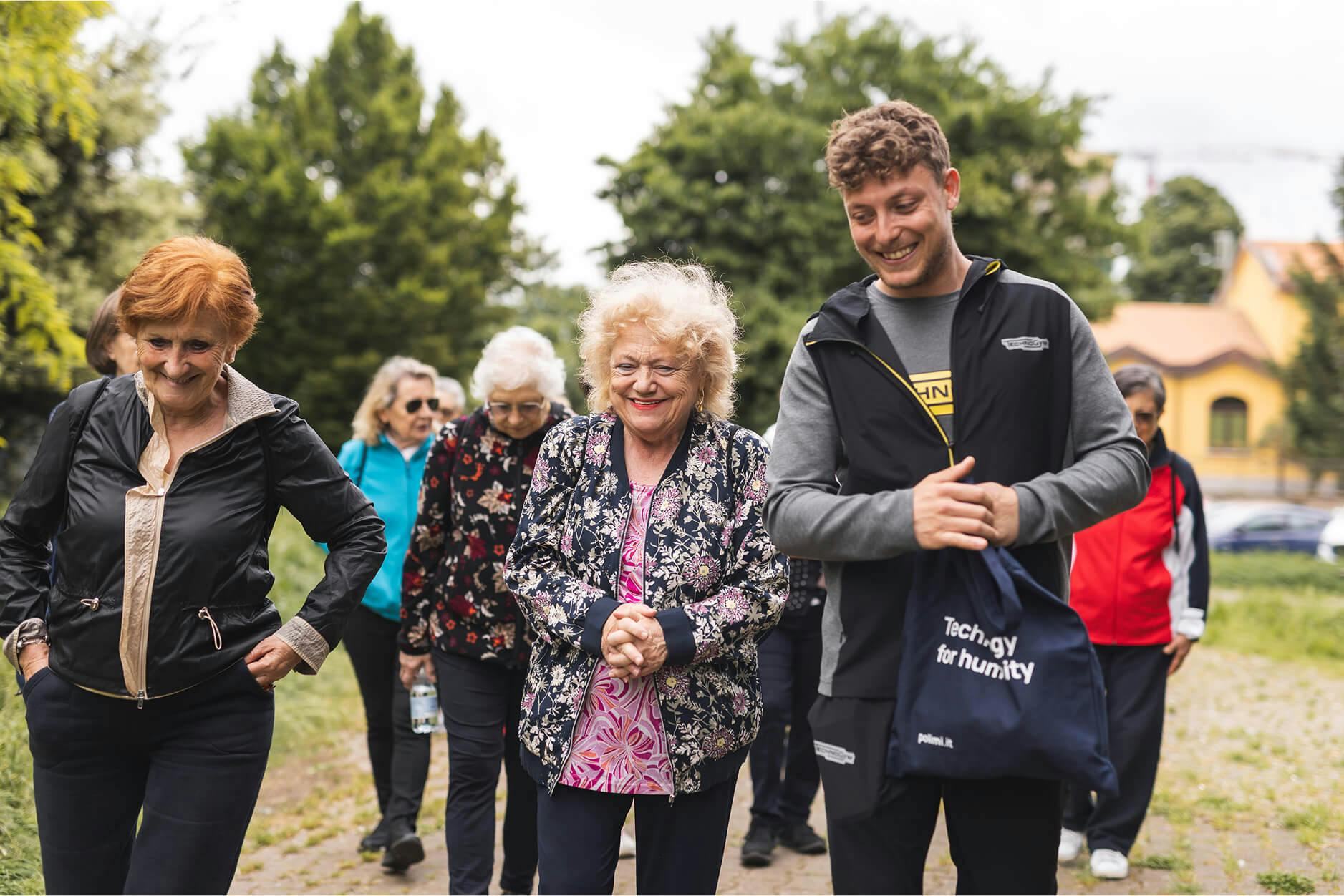
In 2030, the city walks with me
22 maggio 2025
Voices, paths, and transformations of a city that has chosen to support those who live in it: Milan looks to 2030 with a renewed focus on health and quality of life
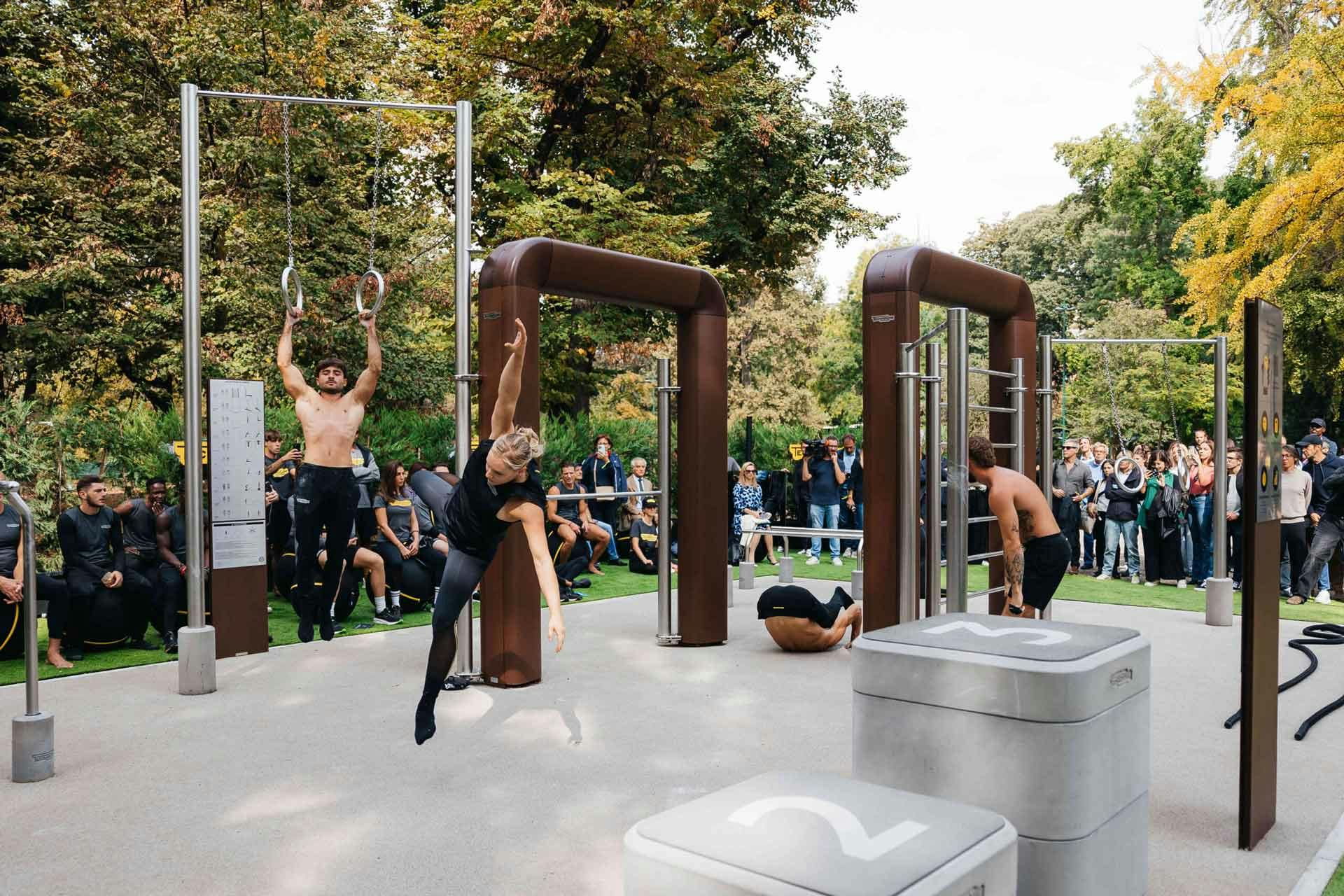
Milan is not just a city to cross in high heels with briefcases full of corporate reports. It’s a city that walks with you. You can hear it in the voices that meet at Parco Sempione in the morning, along the green trails of Monte Stella on Sundays, on the bike paths that run through the city from north to south, and among the workouts at the Technogym fitness area in Parco Indro Montanelli. It’s the story of those who walk or cycle — not as a heroic choice, but because today, it has become almost natural.
Gianni, 72, walks every day with his group at Parco Nord:
«We started with four, now we’re twenty. Walking has improved our health, but also our mood. And the city has given us the perfect space to do it»
Lina, 38, bikes to work using the Cambio network: “It takes me 25 minutes to get to the office. It used to be stressful — now it feels like freedom”. Then there's Mattia, 18, who plays basketball on new open courts in public squares, surrounded by buildings and trees: “It’s not just sports. It’s the place where we meet, where we feel good”. Chiara, 35, trains three times a week at the new outdoor gym in Parco Indro Montanelli:
«I come here before work. It’s how I start my day with energy, and stay close to nature. I used to go to indoor fitness centers, but now I prefer this open space — it makes me feel freer».
Different stories, different ages, different corners of the city. But they’re all connected by a common thread: the ability to live an active life in Milan.
In this changing city, well-being is no longer a luxury for the few — it's a real opportunity for everyone.
Over the past decade, the Lombard capital has reimagined (and continues to reimagine) its urban space as a wellness ecosystem. The Cambio bike network — 750 kilometers, many already active — has redrawn the city’s daily routes. Piazze Aperte (Open Squares), 52 interventions since 2018, have returned space and a sense of belonging to neighborhoods. The city’s major parks — from Montanelli to the Idroscalo — have become true hubs of accessible health, offering classes, events, walking trails, and free activities.
That’s also why Milan ranks as the #1 city in the world (according to Nature magazine) for the average time it takes to reach essential services on foot: just 6.4 minutes. It’s not just an urban planning achievement — it’s a cultural shift.
Ilaria tells us about it too. She lives in Porta Venezia and works in a coworking space nearby:
«In my neighborhood, I can do everything on foot — groceries, a doctor’s appointment, a walk with my mom. In ten minutes, I’m everywhere. It’s not just convenience; it’s a form of freedom that seemed impossible a few years ago».
But it’s not enough to change streets and squares. We also need to change habits, priorities, and mindsets. Because a healthy city is made up of people who choose — and are able — to live in a healthy way.
The data reminds us that transformation is still underway. Nearly 4 out of 10 Milanese live with chronic illnesses, which consume 70% of healthcare spending. In Lombardy, the number of people who regularly engage in sports has grown by 6.6% over the past 20 years, but 1 in 3 is still inactive. Globally, over 80% of adolescents and 25% of adults are not active enough, increasing the risk of premature death by 20–30%.
These numbers remind us that the journey has begun — but it’s far from over. There’s still much to do to make well-being an accessible, everyday possibility for all.
The Milano Wellness City 2030 project stems from a simple yet revolutionary belief: health isn’t built only in hospitals, but in everyday actions — walking, cycling, meeting others, eating well. And these actions take place within an urban setting that must make them possible.
A safe bike lane, an accessible park, an open-air gym — these are not decorative elements of the cityscape. They are concrete tools that give people the chance to live the city better.
Looking toward 2030, Milan is a city that walks with you — not just because it helps you move more easily, but because it encourages you to move toward a better way of living